Blog / 2026 / Animal Individuality and the Good Zoos Do
July 20, 2026
Pets are usually where it starts.
When you live with a nonhuman animal, it’s hard not to see their individuality. The way one cat rarely vocalizes, while another meows along with your singing. Or how one dog learns to ring a bell by the door in order to be let out, while another prefers to wait for the bell-ringer to signal it’s time. No two creatures are exactly the same.
The question becomes: what do we do with our understanding of nonhuman animal individuality?
Some people go vegetarian or vegan. Other keeps eating animals, but work to protect nonhuman beings in other ways. Some give up consuming fish in particular, accepting that the ecosystem-obliterating practices of industrial fishing make any other choice cruel. Others only eat animals that can breathe underwater, believing that fish, mollusks, and crustaceans can’t feel pain the same way that chickens, cows, or pigs do.
There are animal-lovers who renounce keeping pets entirely, concerned about the boredom or angst that animals probably experience when left at home by themselves. And there are those who, like me, have been vegan at home, vegetarian in general for years, and who still believe that zoos do a lot of good.
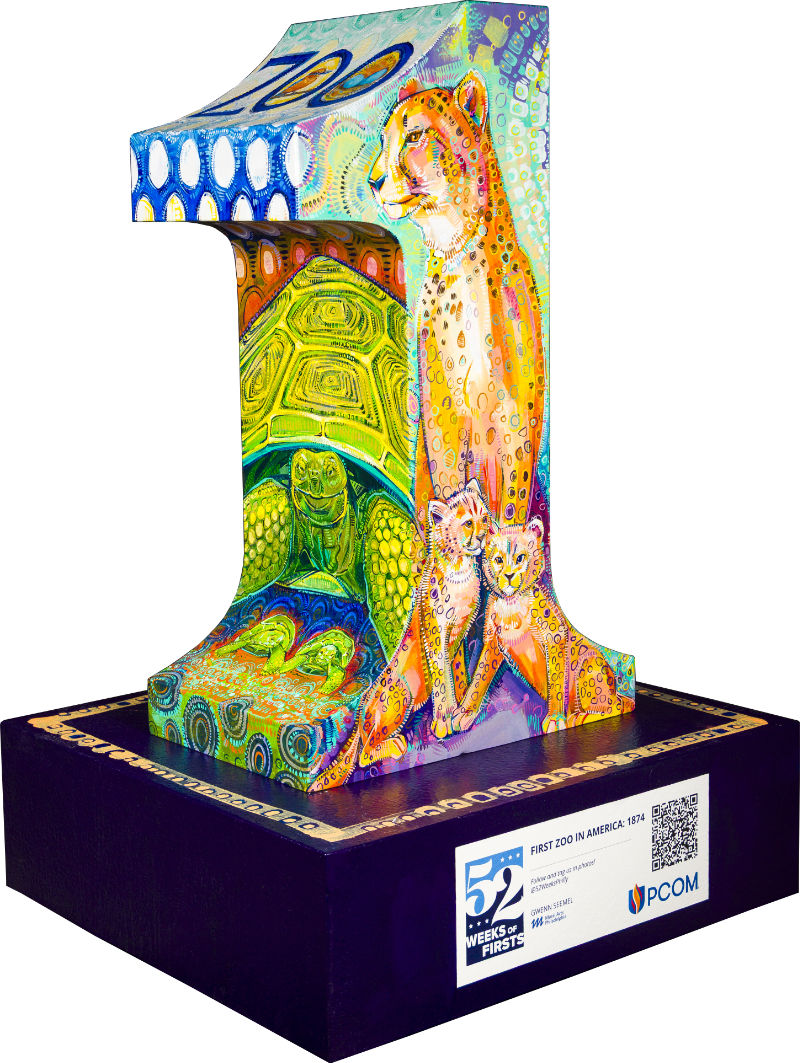
First Zoo
2025
acrylic on all four sides of a foam sculpture in the shape of a #1
56 x 41 x 38 inches (including base)
(photo credit: Colibri Workhop)
I made this artwork to celebrate the first zoo in the United States, the Philadelphia Zoo, as part of 52 Weeks of Firsts, an art-and-history celebration of the US’s first capital.

On the top of the sculpture, there’s a sihek and his eggs, representing the zoo’s conservation program that’s helped bring back this bird’s population. Native to Guam, the sihek disappeared from the island in the 80s after the brown tree snake was accidentally introduced into the ecosystem, decimating bird, bat, and lizard species. Over the last few decades, the Philadelphia Zoo has participated in a concerted effort among multiple institutions to increase the sihek’s population and reintroduce the bird in Guam.

Programs like this are part of how zoos do good. There’s also their work in rehabilitating individual wild animals as well as their research into the biological and psychological* needs of animals—research that contributes to our ever deepening understanding of the importance of biodiversity.
Mainly, I support zoos for the way they connect humans to our planet, fostering wonder and a desire to learn more. This is especially significant in a moment when our obsession with screens is severing us from the real world in new and upsetting ways.
In particular, I’ll cite the virality of wild animal AI videos depicting things like rabbits playing on outdoor trampolines or raccoons floating down a river on a crocodile’s back. These videos look real, and at least some of us believe that they represent how wildlife actually behaves. This is bad, because we cannot care for our fellow beings if we don’t know anything true about them.
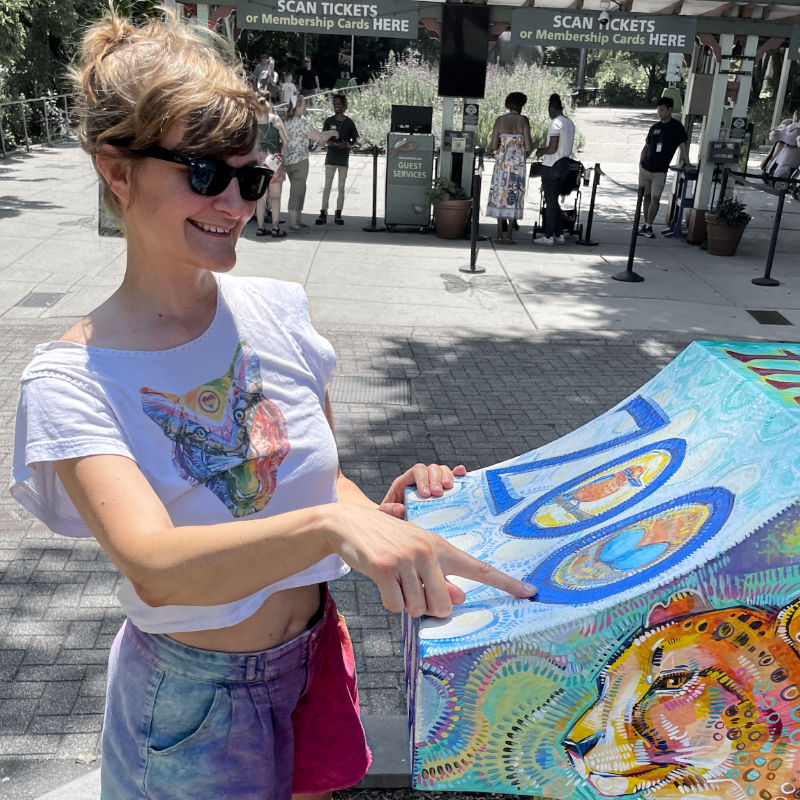
(The Progress Pride flag tiger t-shirt I’m wearing is available here.)
Is the quality of the lives of individual animals harmed by zoos?
Yes. The techniques used to breed animals in captivity are always going to be invasive or coercive. Animals aren’t able to choose their mates or even who they socialize with, and sometimes zoos separate families. The loud noises of city life are often painful for animals, and the blatant unfairness of keeping anyone in a cage cannot ever be explained away.
Do I still think zoos are worthwhile?
Yes, because none of our systems are perfect. Individual humans are harmed all the time by the ways we’ve organized society, even though many of us are trying our best to make our world kinder and more equitable.
Maybe we should burn it all down and start over. Or maybe that would also harm the quality of life for the majority of humans and nonhumans alike. It’s possible that we’re already harming too many of us to make any of this make sense.
Personally, I’d like to keep on trying to make zoos better, while also loving the cat who’s twitchy and easily frightened as much as the one who seeks me out and makes me feel special.
All kinds of cats.
All kinds of humans.
All kinds of individuals.
You can see First Zoo at the Philadelphia Zoo right now! It’s installed just on the other side of security at the main entrance. There’s no ticket purchase required to see it.
If you visit on August 8th I’ll be there with both a coloring page and some stickers to give away as part of the Zoo’s Firstival!
Philadelphia Zoo
3400 W Girard Avenue
Philadelphia, PA 19104
Open: daily from 9:30 AM to 5 PM
Firstival: Saturday August 8th at 11 AM

First Zoo
2025
acrylic on all four sides of a foam sculpture in the shape of a #1
44 x 29 x 18 inches
Besides the first zoo, I also painted the first steamboat and the First Continental Congress. Learn about all three #1 sculptures that I painted for 52 Weeks of Firsts here.
Plan your art-and-history tour of Philadelphia with this interactive map!
* For more about our scientific understanding of animal consciousness, look up the 2012 Cambridge Declaration on Consciousness and the 2024 New York Declaration on Animal Consciousness.
Maybe this post made you think of something you want to tell me? Or perhaps you have a question about my art? I’d love to hear from you!
To receive an email every time I publish a new article or video, sign up for my special mailing list.
If you enjoyed this post, Ko-fi allows you to donate. Every dollar you give is worth a bajillion to me!