Blog / 2026 / The Most Important Question for Representational Painters
July 27, 2026
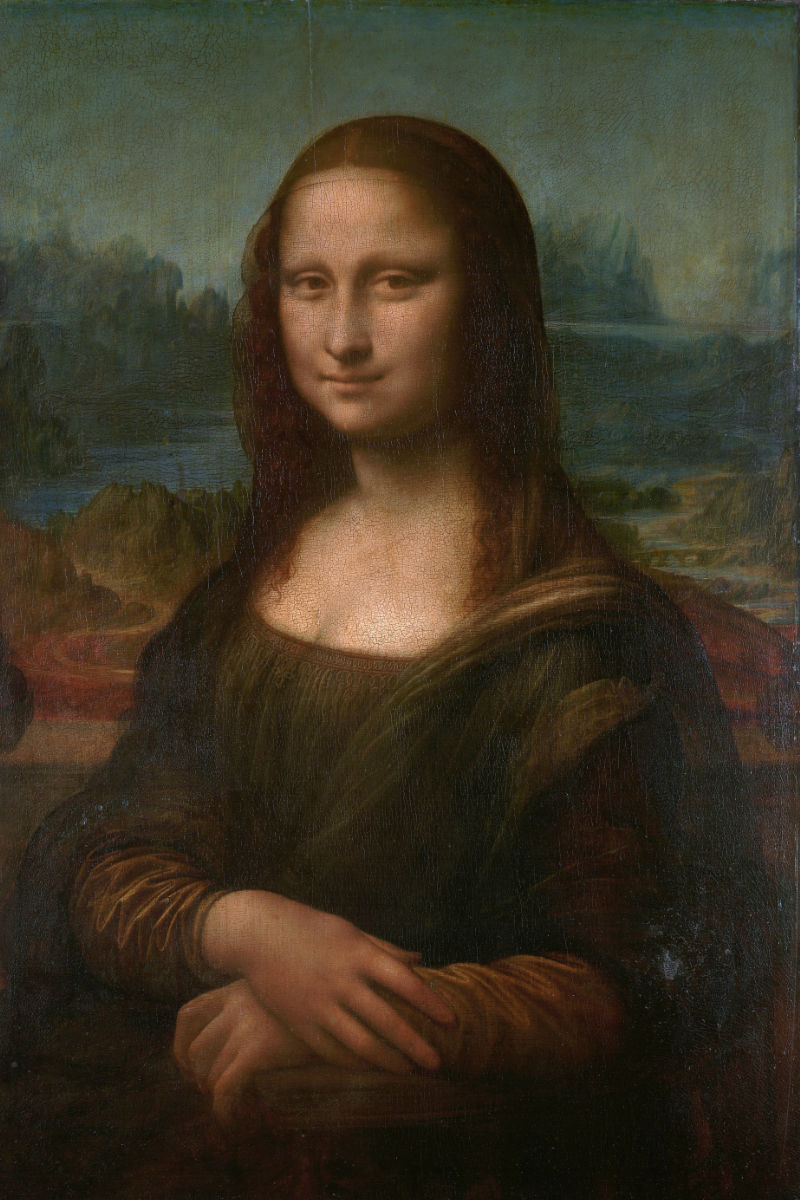
You may not think so when looking at this famous face, but my guess is that Leonardo da Vinci’s main question when painting her was:
How abstract should I go?
Sure, he probably didn’t think it in those words exactly. And not just because he didn’t speak Modern English, but also because the word “abstract” didn’t refer to anything in the arts until a few centuries later.
Still, consciously or not, da Vinci was in conversation with his artwork, and the subject of the exchange was: how far from realistic should I take this image?
In the early 1500s when da Vinci was making this portrait, depictions of humans had been getting more and more lifelike for some time. But no matter how naturalistic a painting may be, it’s still composed of a series of choices an artist has made about what information to include and what to leave out.
In the case of the Mona Lisa, the most obvious abstraction is her hair. This is true in every painted portrait across history: a portraitist must always decide how many of a person’s individual hairs to depict. It sounds silly or obvious, but the challenge of how to adequately capture a subject’s appearance without painting every minute detail is the fundamental problem of portrait painting—and of all kinds of visual art.
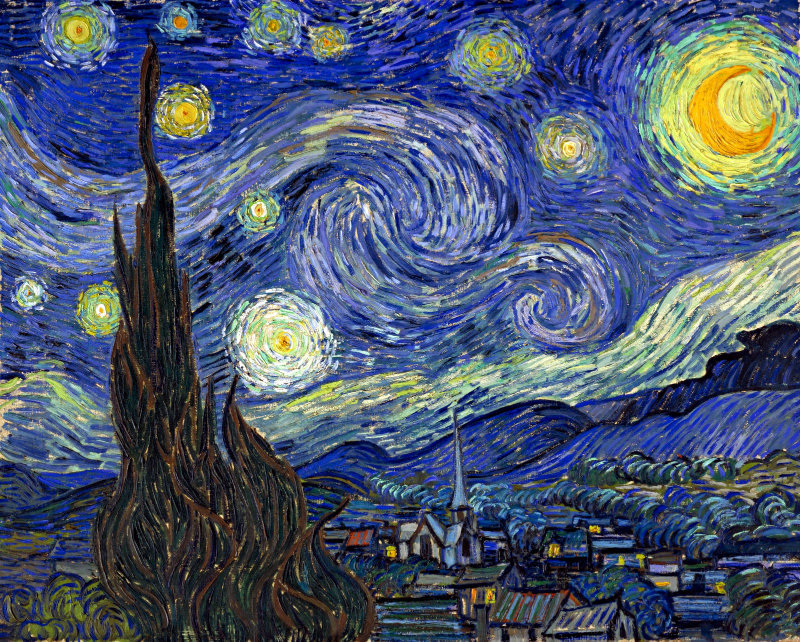
Including this piece.
Working almost four centuries later* Vincent van Gogh’s Starry Night is a stunning record of a painter’s choices around abstraction. And this time, the artist is using that word.
Van Gogh famously argued with the French artist Paul Gauguin about painting from nature, which van Gogh preferred, or thinking of art as an abstraction of nature, as Gauguin did. Van Gogh appreciated the unmistakable style of Gaugin’s paintings, to the point where he was searching for his own distinct mode of expression, writing in a letter to his brother Theo:
“[T]he fact is that I feel greatly driven to seek style... If that will make me more like...Gauguin, I can’t do anything about it. But am inclined to believe that in the long run, you’d get used to it.”
Which, of course, we did! We’re so used to van Gogh’s style that many of us admire a painting that he considered a failure. And though he might not have thought of it this way, I see van Gogh’s signature brushwork as the answer to the question: “how far from naturalistic can I go while still making it obvious that I’m representing a nighttime landscape?”
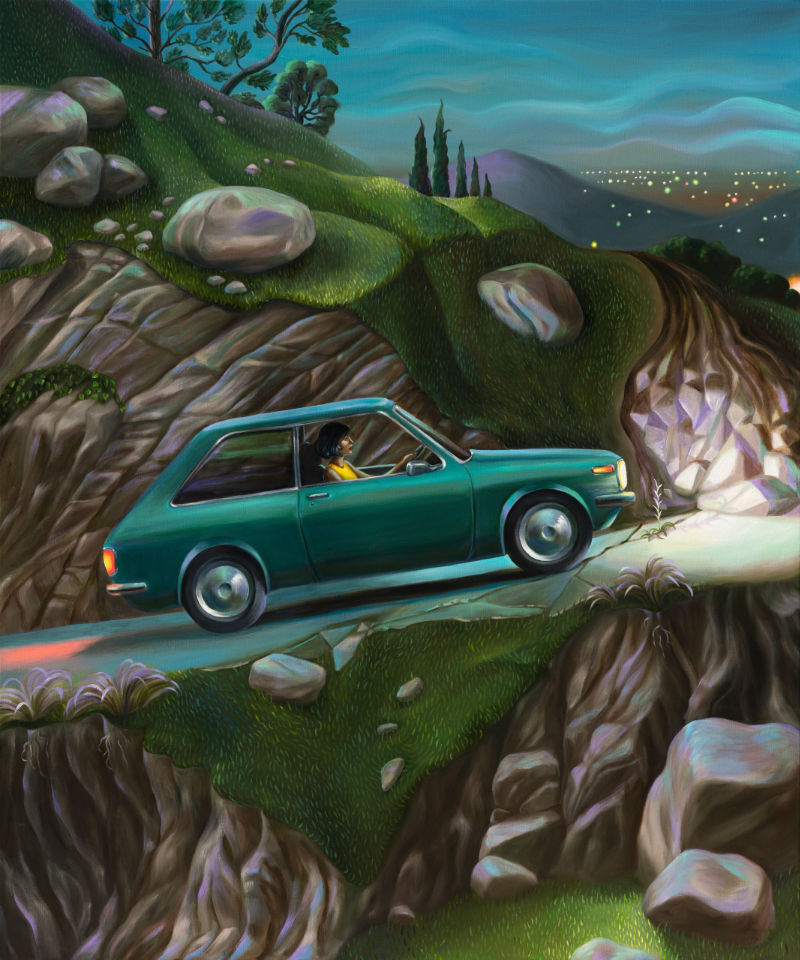
The question is similar in this contemporary painting by American artist Shyama Golden.
I’m not just pointing to her work as an example because I see links to van Gogh in the cypress-like trees in the center background of her composition and in the way she’s painted a flowing and twisting entanglement of masses. Golden’s art is included here because I thoroughly appreciate that, despite the fact that the representation is not strictly realistic, I have no problem understanding that the piece shows a person driving a car uphill on a road that’s falling apart.
It’s in the space between what I know I’m meant to see and what the artist’s choices actually look like that a painting really sings.
In particular, I love the way Golden paints the green grass as dancing touches of light and then gives the rocks a contrasting oozing smoothness. Plus, I’m drawn to the near-symmetry of the reflection of the taillight on the pavement in the lower left and the fiery burst of undefined light at the far right edge of the canvas.
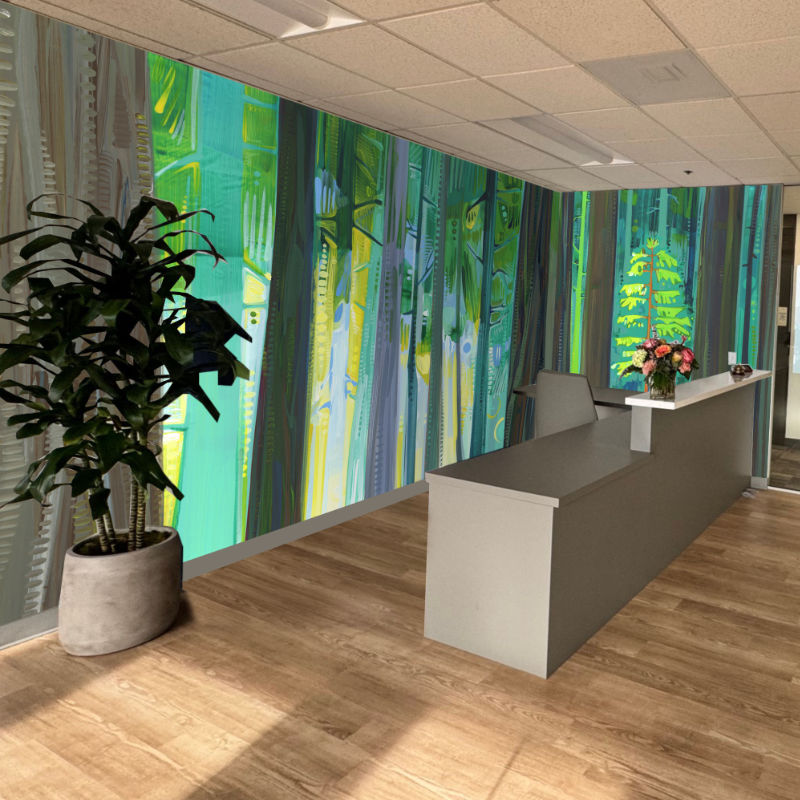
The question “how abstract should I go?” isn’t something I usually think about consciously. After 23 years as a full-time artist, it’s more a feeling I have as I paint, rather than something I actively debate.
That said, as I was putting together this mock-up for a mural that I’ll be painting next month, degrees of abstraction were very much on my mind, because of how the final artwork will exist in the world. I want my depiction of a redwood forest to help visitors to this office to feel more centered, and at least some of that will come from choices I make around the different sorts of detail I include in my artwork.
If you’re interested in those choices and in learning more about the behind-the-scenes for this 330 square foot mural, you can follow its creation on Patreon! I’ll be sharing clips of the process and maybe even a live Q&A during my three weeks of work.
* The invention of photography in 1839 really supercharged artists’ explorations away from naturalism, as I explain in greater detail in this post.
Maybe this post made you think of something you want to tell me? Or perhaps you have a question about my art? I’d love to hear from you!
To receive an email every time I publish a new article or video, sign up for my special mailing list.
If you enjoyed this post, Ko-fi allows you to donate. Every dollar you give is worth a bajillion to me!