Blog / 2026 / Theo of Golden, Book Review by a Portrait Artist
June 8, 2026
Welcome, new visitors to my blog! I appreciate you stopping by, and I’d love to hear from you.
Please note: I’m a real live person who has devoted every one of the last 23 years to art. I care deeply about the world. I hope you do as well.
I wanted to like the book.
I mean, based on the synopsis, what’s not to like? Theo of Golden is the story of a stranger who comes to a small town and begins buying portraits of locals that are on display at a coffee shop, so that he can give the artwork to the subjects.
I wanted to like Theo of Golden because it’s about an individual doing thoughtful things for others. I wanted to like it because that individual thoroughly appreciates art of all kinds. I wanted to like it because I don’t want to be the sort of person who sees their vocation portrayed in a novel and scoffs at the inaccuracies—thus completely missing the point that, when authors write about experiences they haven’t had, it’s okay that they mess up the details on their way to telling a bigger, more poetic story.
I wanted to like the book, but, as a portrait artist, I couldn’t.
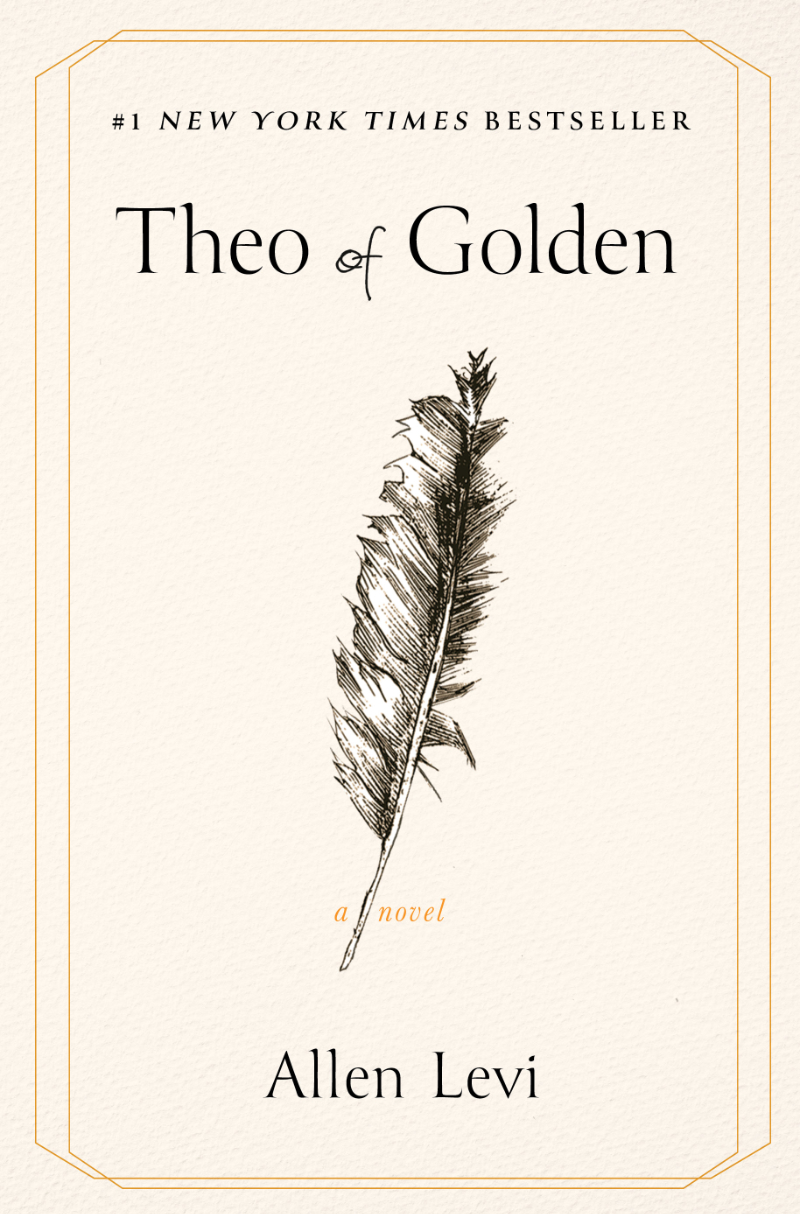
Normally, I wouldn’t take the time to share a negative review of a novel, especially when the story centers on kindness and curiosity as Allen Levi’s Theo of Golden does. But I’m making an exception here, and, by the end of this article, I hope I’ll have made it clear why I think it’s necessary.
This popular novel contains many lessons for its readers. There are the overt ones, like the emphasis on generosity and on spending more time paying closer attention to others.
But it’s the unspoken lessons that left me not so much “thumbs down” but “heart down.” In this review, I want to focus on just three of the most problematic things that Levi teaches readers with Theo of Golden.
1. Villains are obvious in their villainousness.
There are only a handful of bad guys in the book: a father who’s obsessed with money and doesn’t care about his daughter’s happiness, a jealous boyfriend with violent tendencies, and a pack of drunk men. Every other character with harmful impulses—from the a sleepy driver who commits manslaughter to the civil servants who help the State remove a baby from a young mother—is given the dignity of context. We, the readers, are allowed to see their humanity, even in their wrong decisions.
Levi’s chosen villains, by contrast, are without nuance, and, in that way, they’re a lot like most of the female characters in the book.
2. Men are more important.
All but one of the characters with the highest word count and the most backstory are male. There’s Theo, of course, as well as the portraitist, the bookseller, the lawyer, and the cellist.
The only female lead is an unhoused woman with mental health problems who needs repeated rescuing. That’s a very specific choice for the author to make for his main female character. It reminds me of the tradwife content currently flooding the Internet. Because, more than anything, those happy homemaker promotional videos reinforce conservative notions that every woman’s true calling is to be saved by men and cared for by them as well.
The disparity between male and female characters starts early: the book opens with Golden’s coffee shop, which we’re told is owned by a couple made up of a man and a woman, but the woman is only ever referred to in passing.
You might argue that Theo’s first portrait bestowal is to a woman who plays a central role in the book as the accountant whose father is the money-manic villain. But, unlike the unhoused individual, the CPA never takes an action that drives the plot forward. She’s only there to receive the kindness or cruelty of male characters.
One final note about gender: no one in Theo of Golden veers far from heteronormative ideas of what men and women should do with their lives. And none of the characters are LGBTQ even though a large percentage of humanity is.
3. Wealthy people who do good should be sainted.
I’m not necessarily opposed to this lesson in theory. Anyone who makes a point of being good to other humans is a giant to me, regardless of how much money they have. Rather my problem is with the way that the other potential saints in the book don’t make Levi’s cut.
There’s the bike store owner who keeps the unhoused person’s transportation up to speed and eventually gives her studio space so that she can focus on her art. And, of course, there’s the bookshop owner. This character not only allows the woman who’s living on the street to borrow books as if his store is a library, but he, like Theo, is a community hub, who brings people together with his curiosity.
Most importantly, there’s the portrait artist, Asher, without whom there is no plot.
The fact is that Theo’s portrait presentations end up outshining the artist’s intricate and time-consuming work. Asher drew the people of his town to show them their beauty, but, unfortunately, it wasn’t until Theo got involved that they took notice.
Maybe Theo’s bestowals get more attention because he’s a stranger, or because he’s old and has an interesting accent. Maybe it comes down to the charm of Theo’s handwritten notes or the knowledge that someone besides the artist has deemed the portrait worthy.
Whatever the reason, I think it’s more than a little messed up that the community doesn’t seem to appreciate Asher’s skill and compassion without Theo’s intervention. And, as a portraitist, it matters to me that Levi decided to tell the story this way and also that his novel has become so popular.
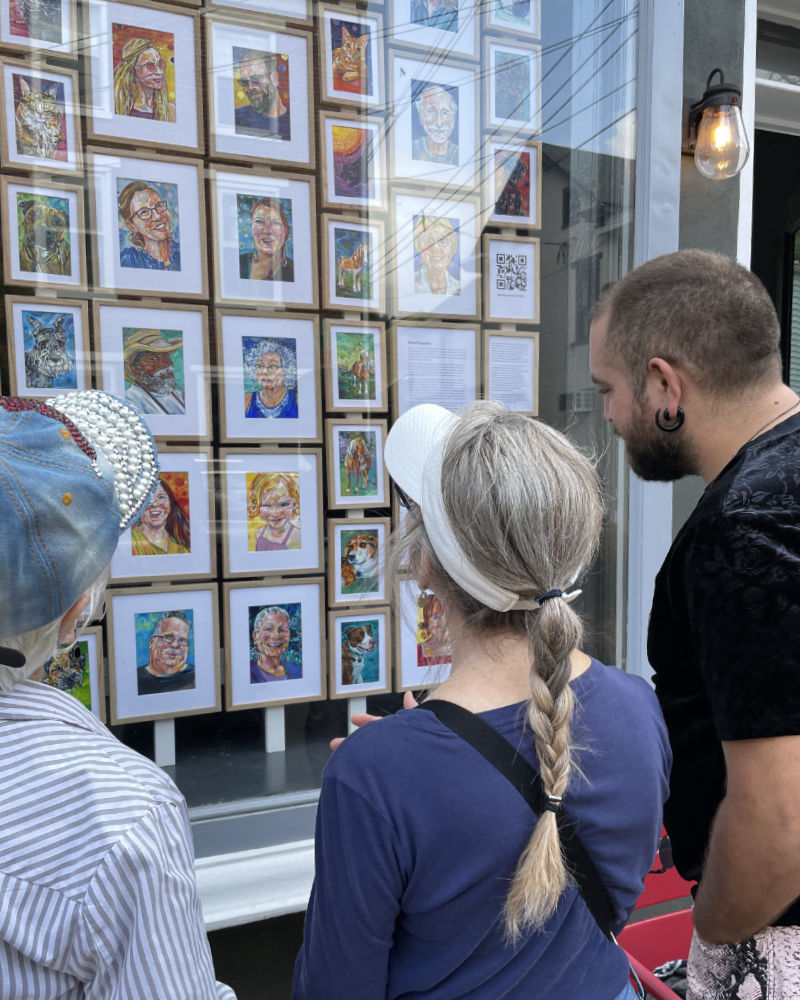
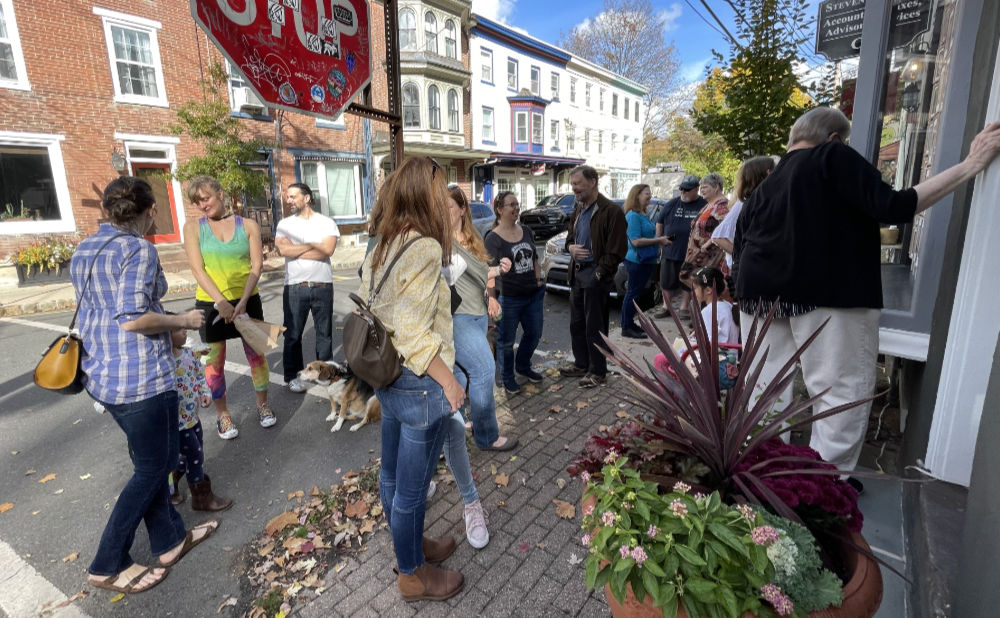
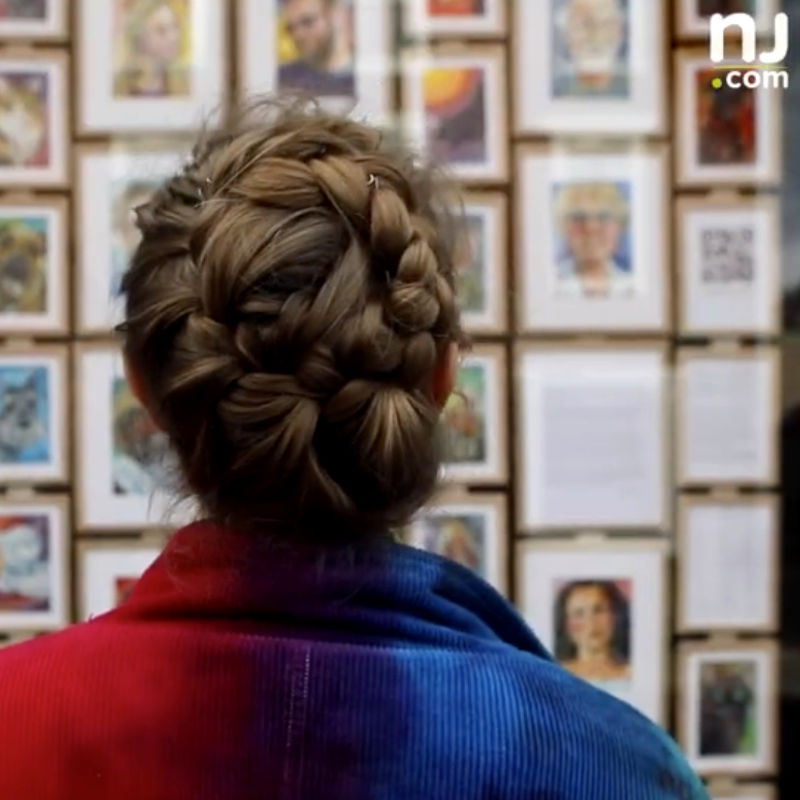
In 2022, when I first moved to the small town of Lambertville, New Jersey, I painted the people I was meeting and displayed the artwork in a window at the center of town. I was, with the help of these individuals, trying to celebrate our community, while also making a comment on our unhealthy fascination with social media, calling the collection Friend Request.
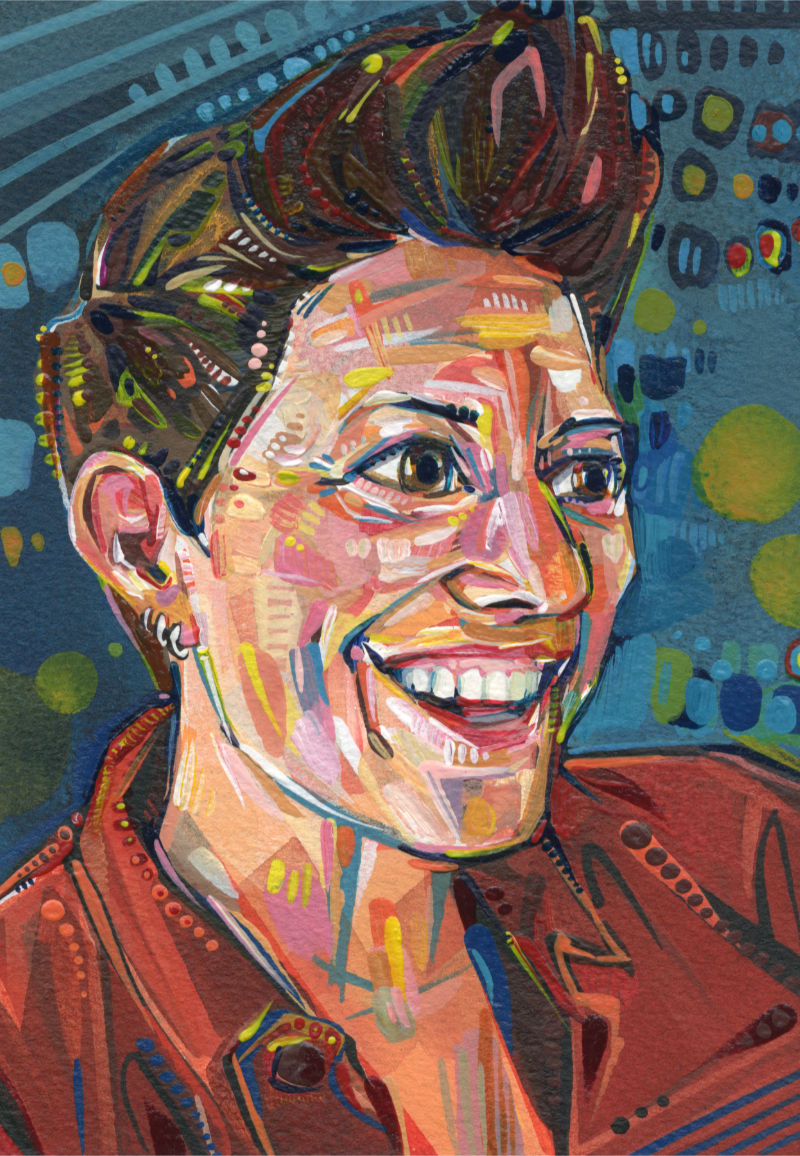
Carolyn
2022
acrylic on paper
7 x 5 inches
(See the making of this painting.)
Like the portraitist in Theo of Golden, I priced these paintings affordably, hoping that the pieces would end up with the people who loved the subjects best.
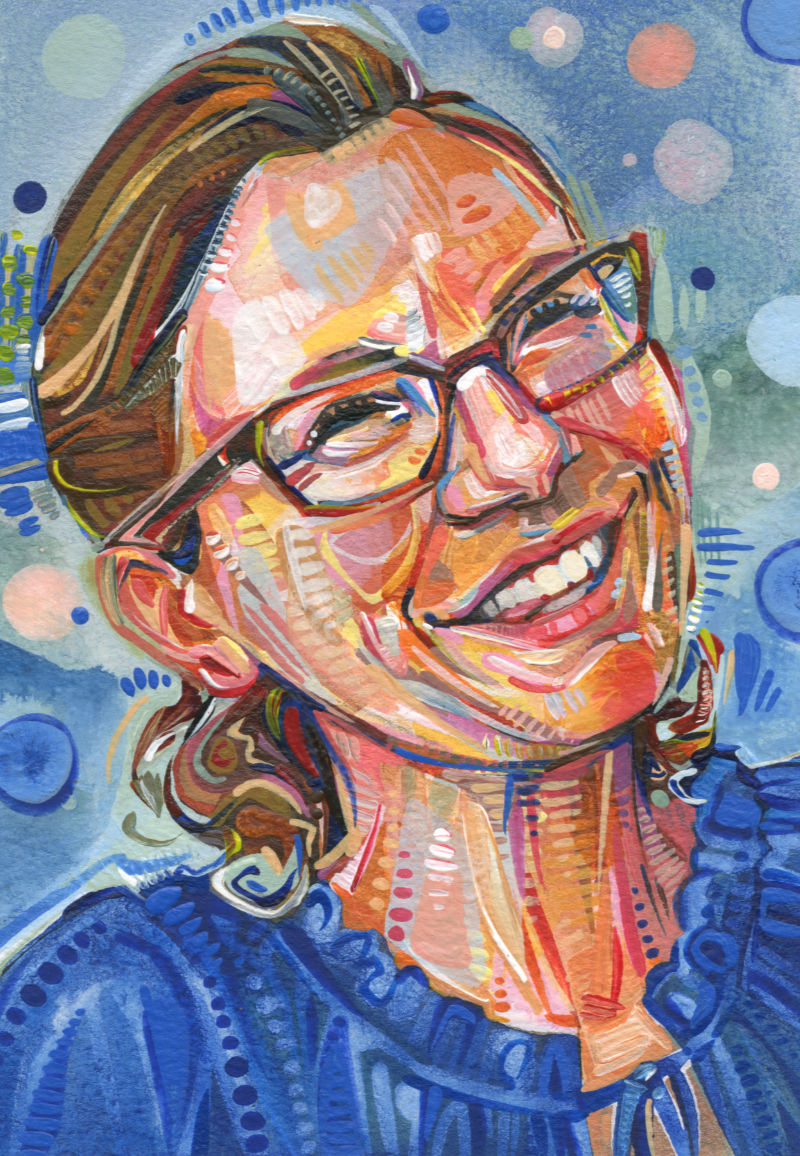
Hannah
2022
acrylic on paper
7 x 5 inches
(See the making of this painting.)
A few of the paintings sold.
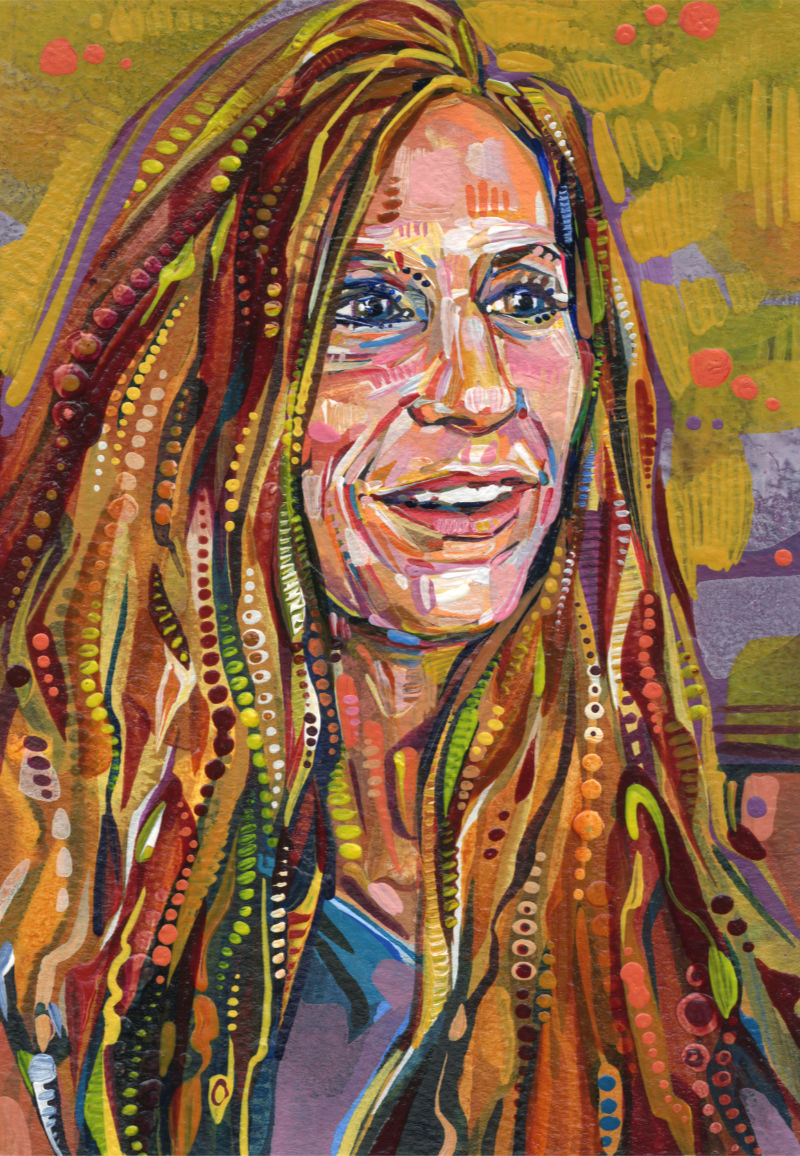
Eleanor
2022
acrylic on paper
7 x 5 inches
(See the making of this painting.)
Many of them did not.
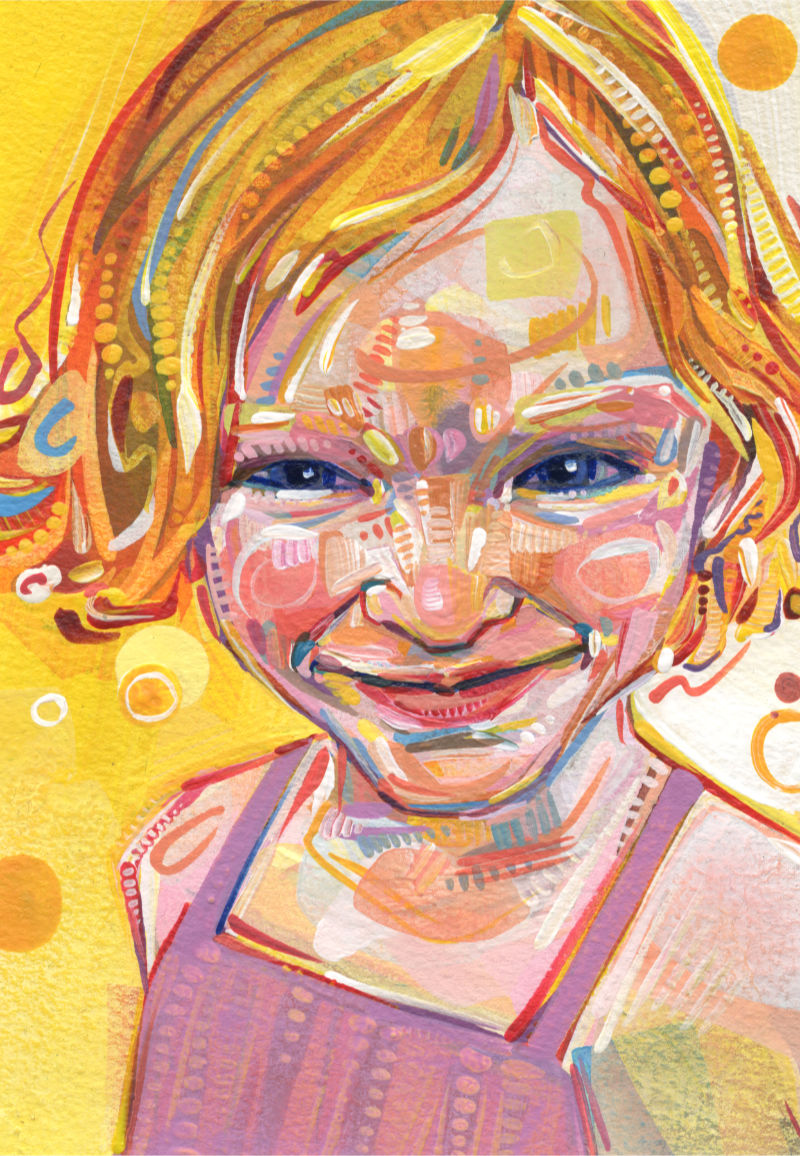
Regan
2022
acrylic on paper
7 x 5 inches
(See the making of this painting.)
No wealthy patron stepped in to help this small New Jersey town see itself and my art anew.
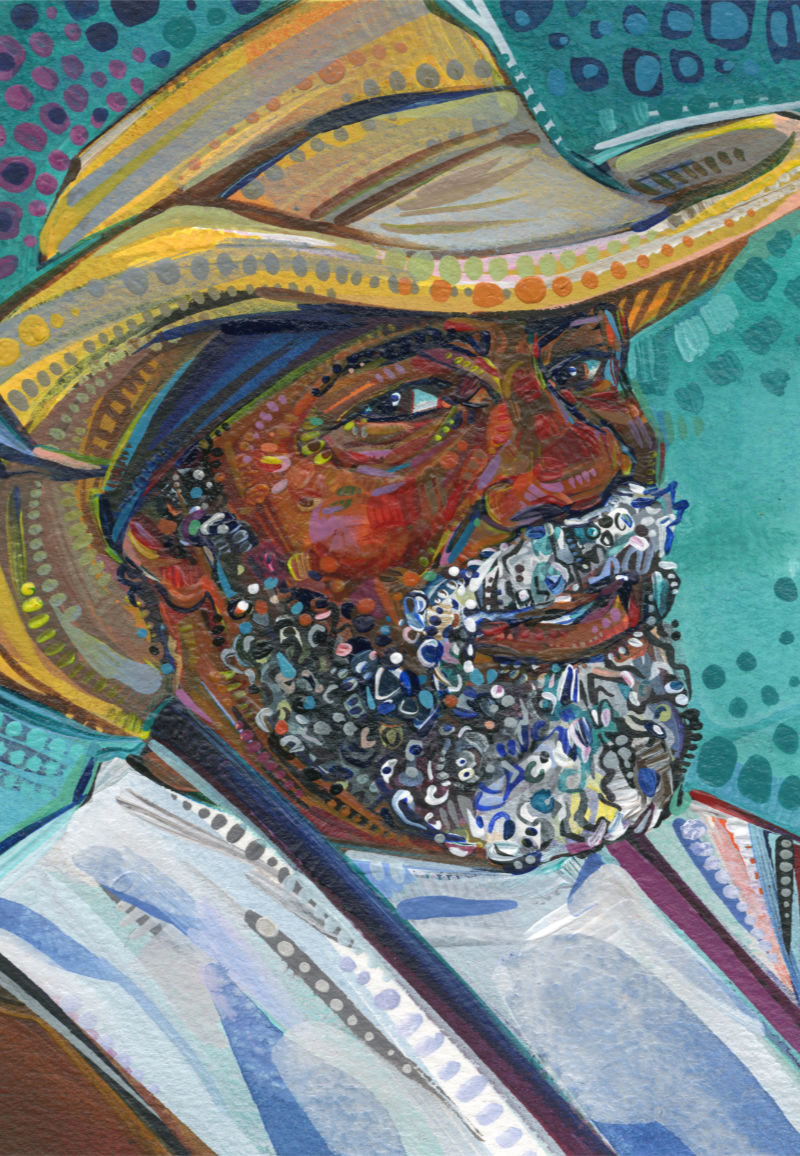
SiriOm
2022
acrylic on paper
7 x 5 inches
(See the making of this painting.)
There was no Theo of Lambertville to assert the of value the art-work I was doing as I affirmed the life-work that each of the subjects had done in order to become the complex and delightful humans I’d been lucky enough to paint.
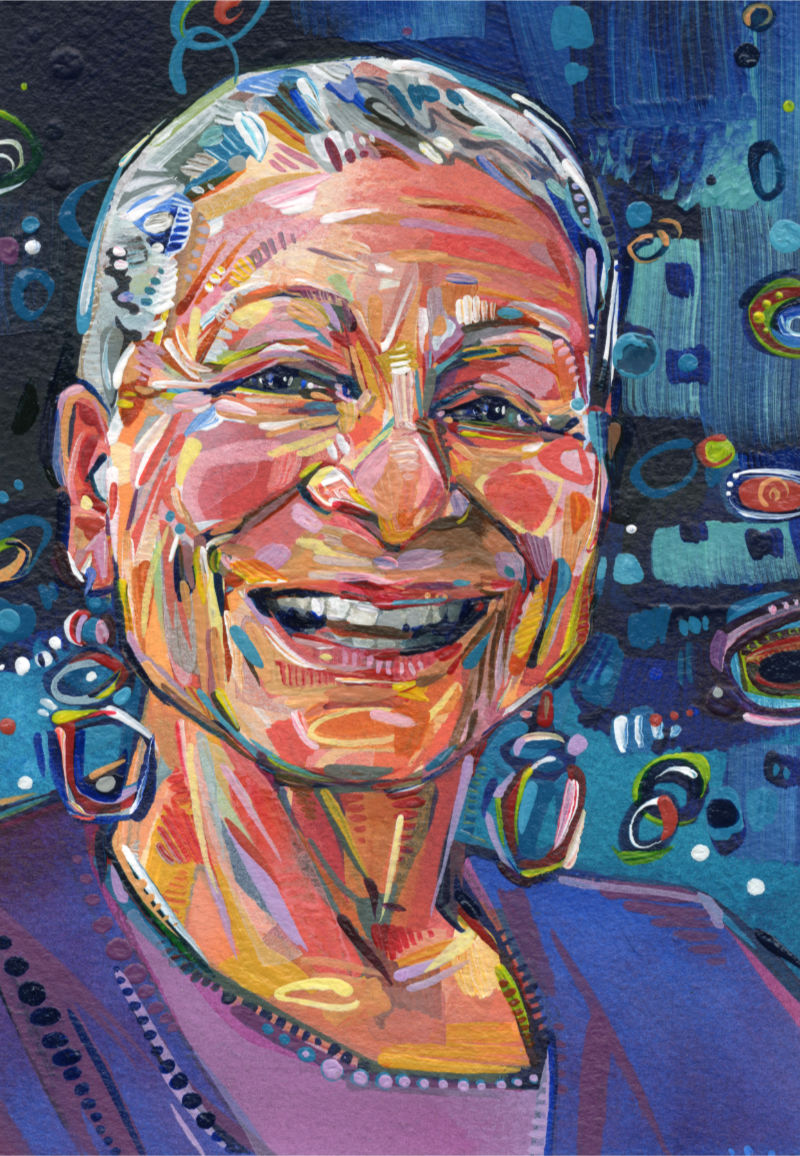
Winifriend
2022
acrylic on paper
7 x 5 inches
(See the making of this painting.)
Nevertheless, I know that the paintings were meaningful to the subjects—that they affected each of them in different but powerful ways.
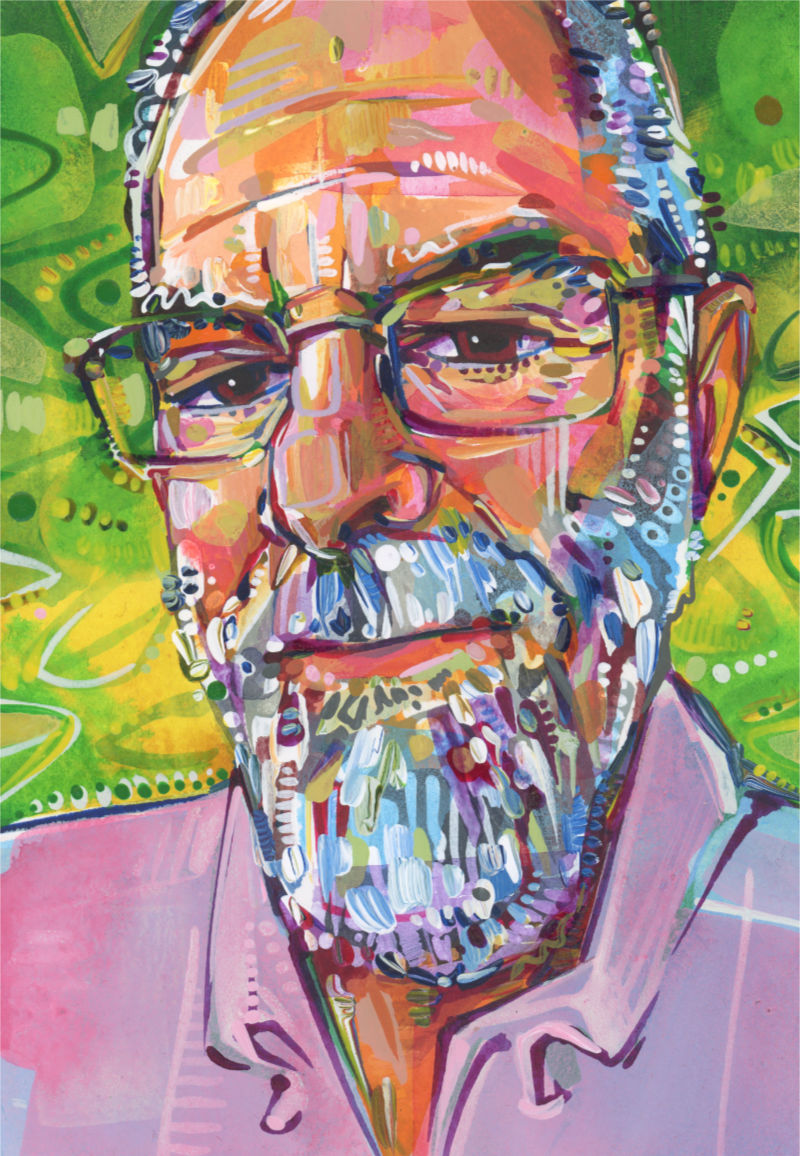
Mark
2023
acrylic on paper
7 x 5 inches
(See the making of this painting.)
A year or so after taking down the display, I raised the prices on the portraits in their listings on this site.
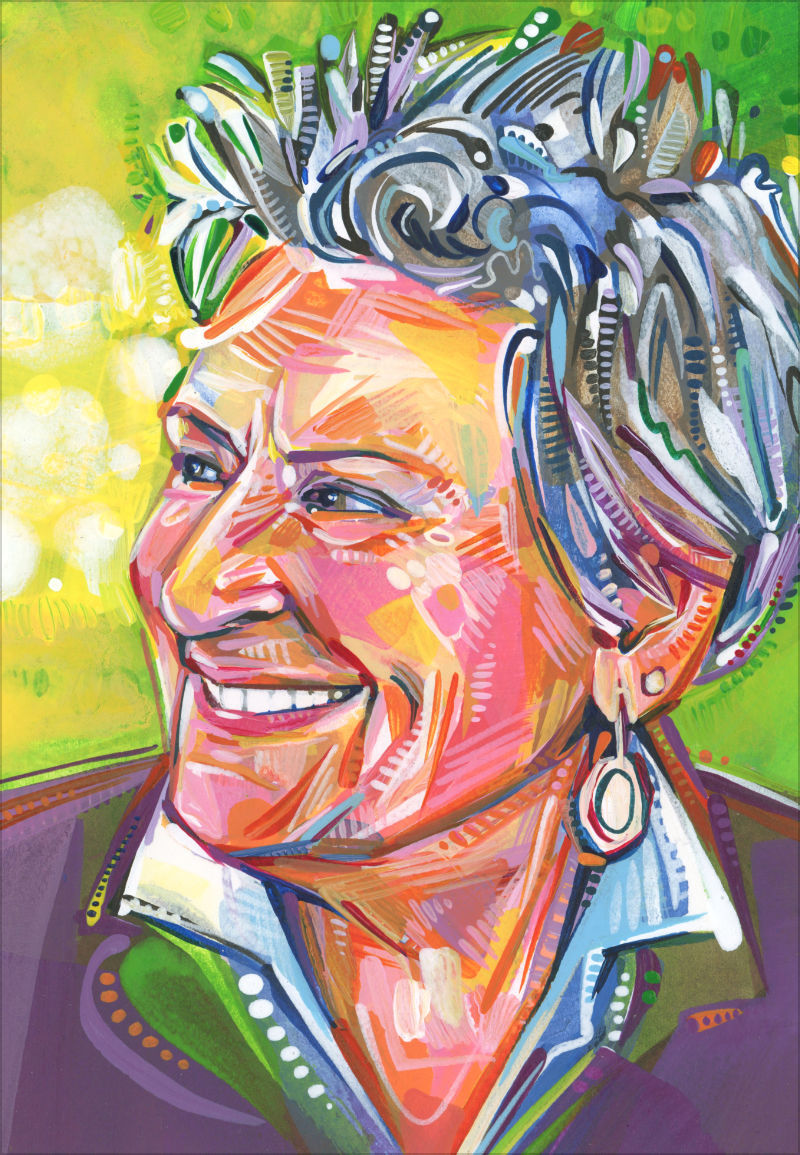
Sue
2024
acrylic on paper
7 x 5 inches
(See the making of this painting.)
I figured that everyone who wanted their portrait already had it by that point.
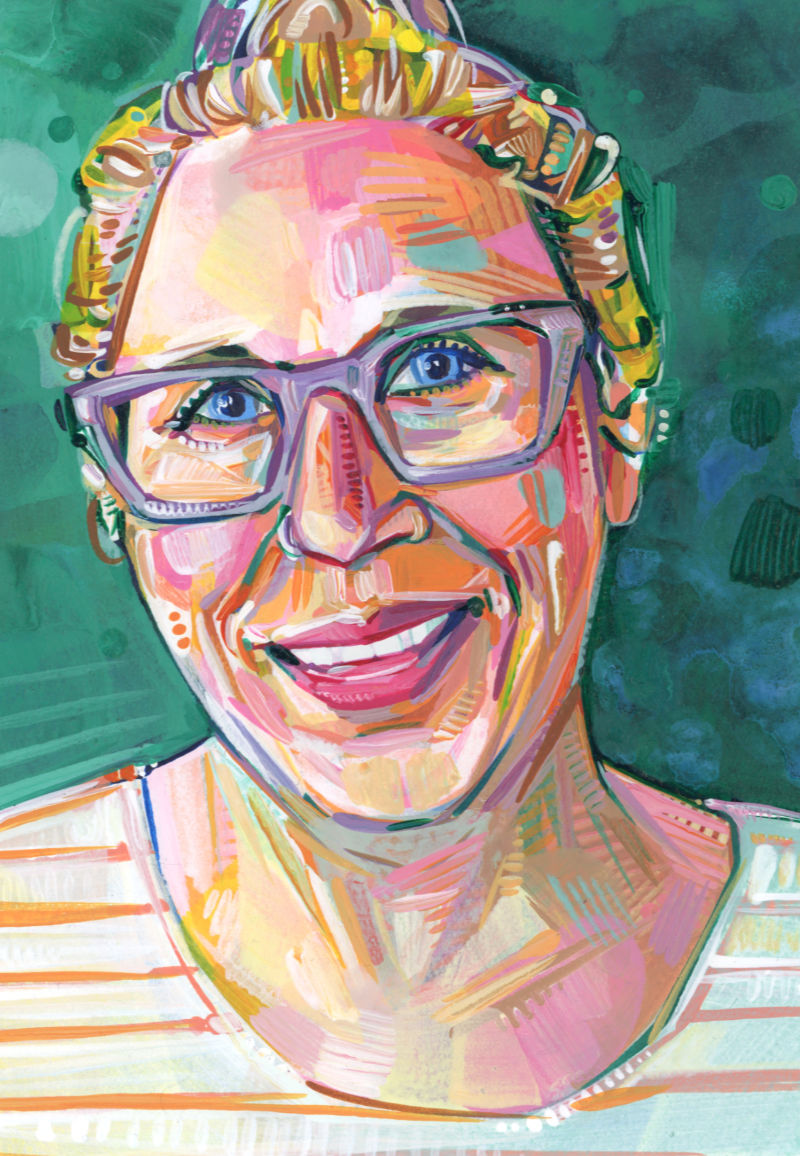
Lindsay
2024
acrylic on paper
7 x 5 inches
The difference between the low price I’d put on these pieces and the rates for the rest of my work was, to my mind, potentially confusing for anyone who might be thinking of commissioning a portrait.
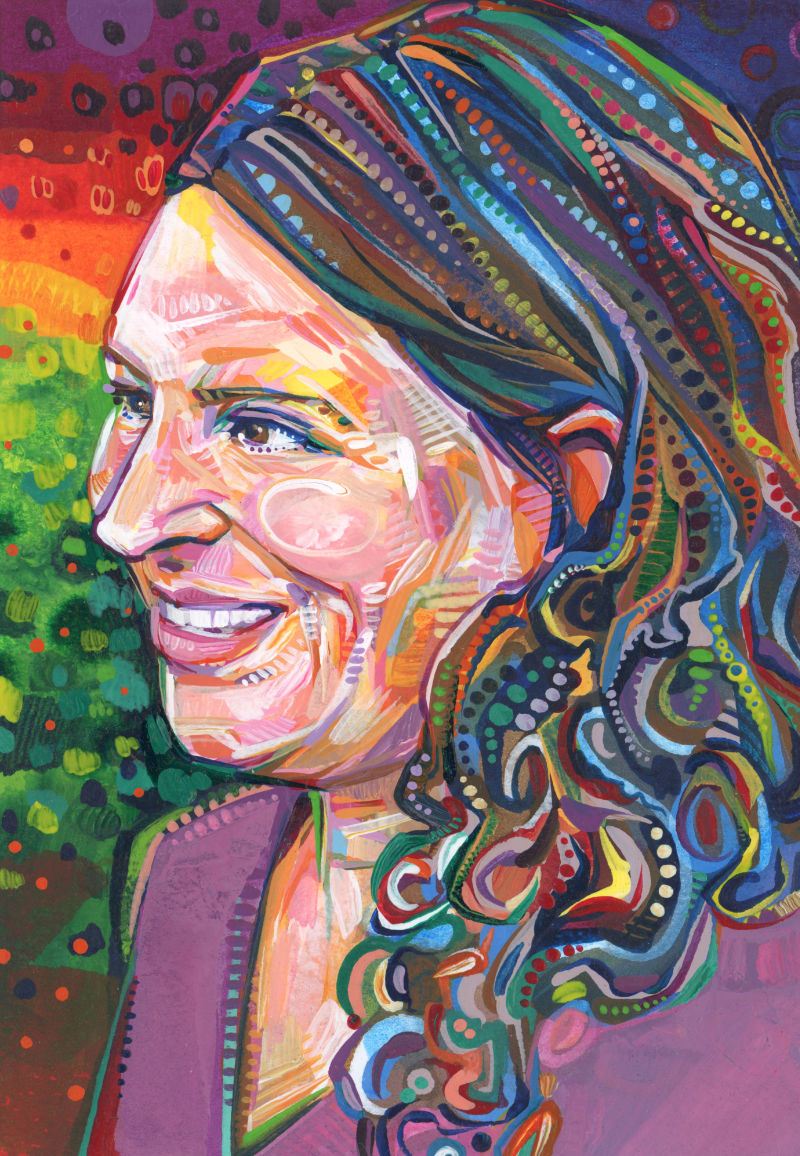
Amy
2024
acrylic on paper
7 x 5 inches
So I raised the prices, and I also kept painting Lambertvillians, adding portraits to the series every six months or so.

Joe
2026
acrylic on paper
7 x 5 inches
(See the making of this painting.)
It wasn’t until I finished Joe’s painting earlier this year that I officially closed the project. Though there are many more lovely people in this town whom I’ve yet to portray, Joe’s likeness is the end for Friend Request, because he’s been important to me since almost the beginning of my time here. With his portrait, I feel like I’ve created a complete picture of my start in Lambertville.
Obviously, my project is different from Asher’s in Theo of Golden for many reasons, but it’s the similarities that cause the third—and most baffling—unspoken lesson to really stand out to me. As I listened to the last hour of the book, all I could think was:
Why would Levi choose to write a text whose main takeaway is that rich people who do good things are more special than less affluent people who do good things? Why didn’t he write Asher of Golden instead? Why wouldn’t the author decide to center the book on any of the other kind and generous characters?
My questions eventually led me to the author’s bio on his website, where this one line in particular seems like at least a partial answer:
“When not reading or writing Allen cares for family acreage...”
It’s safe to say that I learned a lot of things reading Theo of Golden, but the most positive lesson I can glean from the novel is this:
Art thrives when people spend money on it.
Though I didn’t care for Levi’s book, I do hope the novel inspires wealthy people to take the time to learn from artists and find more ways to pay them. Because most artists who don’t have family money struggle to make ends meet despite their enormous contributions to society’s wellbeing.
PLEASE NOTE
If you’re looking for a book about deeply kind people and, more specifically, one that doesn’t assume that villains are obvious and men are more important, I recommend This Book Won’t Burn. My favorite novel about loving art, portraiture, and each other is Emma Copley Eisenberg’s Housemates.
Maybe this post made you think of something you want to tell me? Or perhaps you have a question about my art? I’d love to hear from you!
To receive an email every time I publish a new article or video, sign up for my special mailing list.
If you enjoyed this post, Ko-fi allows you to donate. Every dollar you give is worth a bajillion to me!